For many service members, arraignment is the first time a court-martial feels real. Investigations by law enforcement may have been ongoing for months. Charges may already have been referred. But arraignment is the moment the military justice system formally asserts control over the case—and over you as the accused.

An arraignment is not dramatic. There is no testimony, no cross-examination, no jury selection, and no unanimous verdict. Yet legally, it is one of the most important events in the entire court-martial process. What happens at arraignment—and what does not—can significantly affect how your case proceeds, how flexible the charges remain, and how much leverage either side has moving forward.
What an Arraignment Is Under the UCMJ
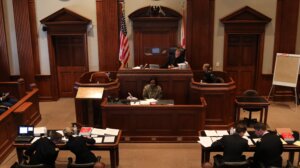
An arraignment is the formal proceeding where charges are read aloud to the accused in open court. It takes place in a military court, before a military judge and with a prosecutor (trial counsel) and defense attorneys, after referral of charges by the convening authority. From that point forward, the case is officially a criminal trial under the Uniform Code of Military Justice.
Arraignment occurs for military members across all levels of court-martial: summary court-martial, special court-martial, and general court-martial. The level of court-martial determines potential punishment and procedure, but the legal impact of arraignment itself is largely the same.
This is also the first time the accused appears before the military judge who will control the case—ruling on pre-trial motions, managing scheduling, presiding over voir dire and jury trials (if court members are selected), and ultimately overseeing the trial itself.
How Arraignment Fits Into the Court-Martial Timeline
Arraignment occurs after several critical steps have already happened. A preliminary hearing or Article 32 hearing may have been conducted. A pretrial investigation has likely occurred. Charges have been drafted, reviewed by a judge advocate, and referred for trial.
By the time the arraignment happens, the case has already passed through multiple filters within the military justice system. That’s why arraignment is not merely ceremonial—it is the point where the trial court formally takes jurisdiction.
From this moment forward, deadlines under the Rules for Courts-Martial (RCM) and the Manual for Courts-Martial begin to matter in a very real way, with a trial date pending in the near future.
What Actually Happens in the Courtroom
At arraignment, the military judge confirms several of the accused’s rights: that the accused is properly before the court, that the court has jurisdiction, that the accused has received the charge sheet, and that the accused is represented by counsel. Representation may include a military defense counsel, civilian counsel, or both, and the attorney-client relationship is formally acknowledged on the record.
The military judge then conducts the reading of the charges, identifying each alleged offense and the applicable UCMJ articles. In cases involving sexual assault or other serious allegations, this may be the first time the accused hears the government’s theory read aloud in a courtroom setting.
Pleas may be entered, but they are often deferred. That decision is strategic and should be guided by legal advice from an experienced military defense lawyer or military attorney.
Legal Consequences of Arraignment
Arraignment quietly triggers several legal consequences that many accused service members do not understand at the time:
- Major changes to the charges become far more difficult once the arraignment occurs; the government’s flexibility narrows significantly
- The accused may be tried in absentia if they voluntarily fail to appear after arraignment
- Procedural timelines begin running, affecting motions hearings, discovery, and trial scheduling
- Forum decisions become more constrained, including whether the case proceeds before court members or a military judge alone
- Appellate issues begin forming, even though the trial has not yet started
This is why arraignment is a moment defense counsel prepares for carefully—it locks the case into a more rigid structure.
Judge Alone or Court Members: Strategic Implications
Although jury selection and voir dire occur later, the arraignment is where the groundwork for that decision is laid. In special and general court-martial cases, the accused ultimately chooses whether to be tried by court members or by a military judge alone.
That choice has enormous implications, particularly in emotionally charged cases or allegations involving enlisted members, active duty personnel, or highly sensitive accusations. Arraignment is where the military judge ensures the accused understands that right, even if the final election is deferred.

Arraignment and Pre-Trial Litigation
Following the arraignment, the case moves quickly into active litigation. Pre-trial motions, including suppression motions, jurisdictional challenges, and evidentiary disputes, are scheduled. Motions hearing dates are often discussed. Issues of extenuation and mitigation may begin to surface.
From a defense perspective, arraignment marks the moment when passive investigation ends, and active defense begins. This is when the defense starts shaping the record that will matter not only at trial, but also on appellate review.
How Arraignment Differs From Civilian Courts
Although arraignment exists in civilian courts, the military version is distinct. Military courts-martial operate under a different legal structure than civilian courts, even though both are criminal trials. Concepts like court members, convening authority influence, and the integration of command authority into the process have no direct equivalent in civilian courts. Also, military courts do not have a “bond” like most civilian courts, so that will not be discussed at your military arraignment.
That difference is why legal advice from a lawyer who understands military law—not just criminal law—is essential.
Why Preparation Matters More Than the Hearing Itself
Arraignment is often brief. But preparation for arraignment is anything but. This is the first time the accused stands before a military judge, the first time the government’s case is formally placed on the record, and the moment when procedural doors begin to close.
Service members who treat arraignment casually often regret it later—especially when they realize how much leverage was lost simply by being unprepared.
Facing Arraignment? Don’t Walk In Cold.
If you are active duty in the Air Force, Army, Coast Guard, Marine Corps, Navy, or Space Force, or serving in any component of the armed forces and facing arraignment in a court-martial, this is not the moment to “wait and see.” The decisions made here affect trial strategy, appellate posture, and ultimately your future.
Call 833-231-8633 today to schedule a free consultation with a military defense team that prepares clients for arraignment with the same seriousness as a trial. From legal advice to courtroom presence, we ensure you walk in informed, prepared, and protected.
Arraignment may be the first step in your trial—but it should never be the first step in your defense.